Showing posts with label mountain running. Show all posts

Monday, March 17, 2014

Quandaries

I've become entirely too lax with this whole blog thing.  This post and the one to follow it should suffice to cover everything of note the past few months, and I plan in posting more regularly now that Western States training will be coming on full steam.

First, I got picked up for the Gu Crew for 2014 which is great.  I plan on going back to school in the fall without working, so any help to keep running is endlessly appreciated. Plus, getting a little support from a company definitely makes me feel as though I'm starting to do something right.

The year started with a truly epic road trip.  Epic is a tremendously overused word, but it fits the trip perfectly.  4500 miles in a car in two with two friends, plus another 600 on my own getting to and from Cincinati.  We hit a lot of mountains, a few canyons, and 15 different states.  Most of the trip was spent in Colorado, where we did a lot of vertical in a lot of snow.

I've spent nearly 5 months in Colorado now over the past few years.  Compared to natives, that is not much time but it is enough to provide a certain degree of confidence whenever I decide to go high.  However, no matter how much time one spends in the mountains, the mountains will always provide some new tribulation if you get cocky.

Patrick McGlade had a few days off work surrounding the new year holiday, so he served as our stellar guide for hitting new front range mountains [Rudy had never been to Colorado and Wyatt had only seen one 14er].  After turning down Grays Peak after losing too much of the morning to get down safely, we decided to hit Quandary a couple days later.  We shrugged off a snow forecast for Breckenridge, figuring the storm would hit in the afternoon as they so often do in Colorado.  Starting up the mountain was jovial and pleasant.  We played around and trotted up above treeline. But with about 1500 feet left to the summit, we entered another world.  Where below we enjoyed the sun with jackets unzipped and gloves off, we met an almost immediate shift in conditions that only got worse as we kept climbing.
Enjoying the climb before we reached the storm
Photo by Rudy Rutemiller
The path up Quandary from just above treeline is relatively simple, follow a ridgeline 2 miles until you top out.  With strong gusts of piercing wind and stinging snow, though.  Keeping to the path and avoiding the left edge was an interesting game.  Patrick and Rudy went off ahead as I struggled to keep upright, with Wyatt further behind me. I grunted my way up the mountain however, deeper into hell. Above ~13,500', the conditions were white-out.  The steady wind coming over from the right was enough to keep me braced for support, and the occasional gust was more than enough to blow me back a couple steps.  Step, step, pause, step, step, fall back two feet. Repeat.  At 13,800' I passed a man who knew what he was doing, dressed in a down jumpsuit with poles and mountaineering boots to keep himself upright.  Sometimes, I meet situations in the mountains that warrant laughing at the absurdity of it all--it was too cold for that here.  I kept a buff over my fast as long as I could, but before long that caused my breath to freeze both lenses of my sunglasses.  Pulling down the buff caused it to quickly freeze solid, rendered useless.  After this experience, I believe I know true cold.
Suffering on top of Quandary.  Note that I did not crop this--that white was up there.
Photo by Patrick McGlade
From here, there was only reason I kept pushing upward--Rudy and Patrick were up top and I had no way of saying "Fuck this, I'm turning back," which is all I had been thinking for the past several minutes as I continued grunting upward.  At 14,000 feet Rudy and Patrick came back down, and I thought, "Finally I can quit," but Patrick turned upward toward the summit again with only a few words of exchange and no time to argue.  I followed him.  I am glad I did, since it was only another 2 minutes to the top.  A couple quick photos and we turned downward.  The summit featured about 40 feet of flat, and the wind was so strong that I got blown off my feet mid-stride only a dozen steps from the summit post.  Terrified of worsening conditions, we bolted down the mountain.  Now came a new balancing act: avoid the drop-off to the right and the loose rock below foot. While trying to get blown over by the 60 mph gusts. While you can only see 5-6 feet down the trail.  I lost Patrick within a minute.  I saw him again 400' down the mountain, and I believe he was never more than 15 feet in front of me going down that stretch.  Not long after, we caught Rudy standing with Wyatt still on his way up.  Wyatt made the right call and turn back.


Rolling down the mountain near Wyatt
Not long after, I thought I was comfortable enough on terrain to open up my stride and hopefully get below treeline faster.  Almost immediately, I took what I felt like my worst fall every.  I landed square on on my front, with my forearm between my body and the rocks below.  I started screaming.  It took me nearly a minute to stop just screaming and try to do something.  I broke my wrist in middle school, this felt worse.  I rolled onto my back, hoisted myself to a seated position and tried to assess the damage.  The rock had at the least torn through my shell, which worried me about what lay underneath.  Standing up, I began walking downhill--running was too painful.  By the time we dropped out of the storm, I was able to run; my arm was not broken and I now attribute that pain mostly to the cold.  Again on the descent, we were met with a second world.  We descended out of the white-out storm into clear, sunny snowfields a few hundred feet above treeline.  We advised a few parties to turn back from their summit attempts--one of which did not even have crampons--and feeling safe again, took to playing in the snow.  We glissaded and postholed around on our way back down into the trees before trotting the rest of the way down to the cars.
Snow blowing off the mountain well below the storm.

Fighting the weather up high was the most harrowing experience I have ever had, and I plan to channel that suffering into every new adventure I have for quite some time. I have a new respect for the mountains--a respect that I think can only come with the outcome of underestimation and lucky success.

Monday, May 20, 2013

Cruel Jewel 100--A report long enough to do the race justice


It was all for this.

Warning: This report, like the race is gratuitously long.  Go grab a beer, and maybe even a meal.  You'll be here a little while.

Friday started after a surprisingly uneventful night's sleep and a 5:45 alarm to meet up with Eric for the drive down to Blue Ridge, GA in time to do drop bags and rest a little before out 2 pm start.  There we met Willy, the RD for this fine event, who told me he had gotten elevation gain for the course ranging anywhere from 29,000 feet to 37,000 feet.  That's when I got really excited.  After, I'm going with ~31,000 climb total, but I am not sure.  I do know the race is ~110 miles long, just for added fun.

The plan was (for as long as possible) stick together--Eric as his well-practiced 4.1 mph trek and me doing my best not to go too fast.  Well, the first 35 miles of the course is easy, all things considered.  We settled into the planned theme--hiking all the climbs and trotting the descents--all the while focusing on saving energy.  Our average pace those first 35 miles was something like 13:00/mile pace.  This stretch was uneventful, albeit rather flat compared to the overall elevation change. There were 6-9 miles of road, and the trails were reasonably groomed.  The only real difficulty was managing the climbs in the Georgian spring humidity--this caused all sorts of problems.  Then the walls came. 

The Duncan Ridge Trail, that makes up (listed) miles 35-75 is nothing but a series of 300-600 foot walls.  Grind up, and then lean back, doing your best to stay upright going downhill.  As we came into mile 42.5, I was starting to feel weary, but wrote it off to not having hit the caffeine yet.  In reality, the slow pace was catching up to me.  We got hit with rain leaving this aid station that followed us for the next four hours. On the ridge line. Exposed to wind. Right as we're about to climb to the high point, a bald at 4300 feet.

The aid station volunteers at "mile 47.65" were the first introduction to a huge bonus of this race.  The workers were AMAZING.  The best I've ever seen.  These two guys, up on the mountain not really moving around all night and into the following afternoon, gave us their jackets so we wouldn't freeze climbing up and over Coosa Bald in the rain.  They actually suggested the idea and I couldn't think of what to say at first because I was simply not expecting such generosity.  Going up and especially down the other side of Coosa to the turn-around was death march slow.  We were in intermittent cold rain, descenting 3000 feet over 7 miles, with 1100 feet of climb thrown in their for good measure.  On extremely technical rocky, rooty single track.  We were moving slow.  Motivation at this point wasn't just deflated, it was downright gone.  We hit Vogel in ~15.5 hours.  This is listed as 55 miles into the race.  Eric's gps (and others) clocked this at 58+ miles.   I was a wreck.  I was soaked through. Hungry, sleepy, pain creeping in.  I actually knew I couldn't finish as I was.  But, there is a 48 hour cut-off for the race.  So, I ate two amazing cups of homemade chicken noodle soup and passed out on the bed for 20 uncomfortable minutes.  When I got up, I (still not planning to actually continue) started my drop bag routine.  Eric told me he was pretty ambivalent to continue before we laid down, but afterward he mentioned he was going to continue so I thought I should at least try.  I loaded my pack with little debbies, snickers bars, shot bloks and gels.  I applied A&D to all the right places (damn the rain).  And I changed into a clean shirt.  Another cup of soup and a grilled cheese and I decided I'd keep going.  Here, I made a huge incorrect judgment call and did not change socks, assuming the new ones would just get wet in a couple miles anyway.

The back up Coosa Bald was actually rather nice.  The sun had just risen, we were passing 50 mile and 100 mile runners on their way down the mountain, and I felt reasonably regenerated by out 90 minute stop at Vogel.  Eric pulled away about halfway up (he can hike just so well), and I didn't really expect to see him again. Then leaving the aid station on the other side (same one as the jackets before), everything went wrong.  This section is 7.5 miles long, all on the Duncan Ridge Trail.  I planned for this to take 2.5-3 hours based on what the climb up Coosa, another 7.5 mile stretch too.  2 minutes out of the aid station I lost the peanut butter sandwich I had just wolfed down.  Then I started moving again, but couldn't hold it together.  I ran out of water in 2 hours, about halfway through the section.  This 7.5 miles took me 6.5 hours.  No typo there folks--6.5 hours.  After I ran of water, I didn't eat any more since eating without water would cause my stomach to turn. I kept hiking, using every bit of will I had to move forward.  I stopped several times just to scream from how much my body hurt. I moved forward though, as slowly as is possible, until I collapsed in a chair, shivering even though it was close to 70 degrees, at the "Mile 70) aid station.  Here, the only reasons I did not immediately turn in my bib were 1. It would be a couple hours at least until someone could come get me and 2. the 48-hour cutoff.

This aid station was my second instance of amazing volunteers.  The girl working helped me peel of my shoes and socks, tried lancing a (currently) non-existant blister on my trench-foot begotten feet, made me wolf down THREE PB&J's, wrapped me up like a burrito in a blanket followed by a sleeping bag, and made me hold hot water against my core to stabilize.  I had definitely been tapping into my fat stores before the aid station.  She then took my wet socks and shoes and stuck them under the heater in her car to dry out.  Honestly, I would not have finished the race if she hadn't done that.   35+ more miles when I was already developing trench foot would have been mentally (and possibly physically)  impossible for me. After I saw a few friends come through and realized I was actually joking with them, I decided that even though my body had quit on me already, my mind was in too good of shape to stop here.  So with a lot of help from that kind volunteer, I pulled on my socks and shoes an hour after they came off and started moving again.  The next several climbs were even more miserable than the ones into the aid station, but I was moving with a little determination.  The descent down Coosa bald was the first time I got to open up my stride in over 40 miles, and it felt great.  I clocked some really good miles (at the time) into the drop bag aid station at "mile 80".

I hit a wall out of that aid station though.  My joints finally quit on me, and I could nothing but shuffle forward.  The 80 miles of technical single track I had completed thus far, along with a pace much slower than I was used to in training caught up to me.  My ankles had filled with fluid and stopped long ago, then my knees joined them, and now my hips were stiffened up too.  My muscled were fine still, even my quads, but my joints were gone so the muscles were useless.  However, a mile out of the aid station, a female runner Carin and her pacer Mollie caught up to me and I resolved myself to stick with them.  The company was much needed, and I would not have finished without them.  I forced my body to shuffle along, and we talked a great deal.  I hadn't had a real, lengthy conversation since I left mile 70 and it was much appreciated.  Carin was miraculously doing this race as her first 100 miler, and she crushed it.  Mollie was a good pacer, constantly reminding Carin to eat and drink (which caused me to follow suit).  Somewhere in these miles, my joints started getting more painful, causing me to groan pretty regularly and stumble some.  Mollie did a good job talking me up and keeping me moving when I wasn't even her ward.  She had us both laughing off our hallucinations, joking about her watching my butt, and talking about almost anything but running.  Some pizza and grilled cheese at "Mile 87" hit the spot and we 'speedily' hiked the "3.3 mile" road section into the next aid station.  Walking along that road, I actually swayed and dozed off a couple times while still walking.

At the aid station, I finally realized I should have started hitting the caffeine hard much earlier, so I drank two cups of Mountain Dew, did 50/50 of water and Mountain Dew in my pack, took some ibuprofen, and we were off.  I left about 30 seconds after Carin and Mollie, so had to play catch-up.  Having to speed up to catch them, I realized I felt okay for once so I leaned forward and ran up the mountain away from them.  Running again felt amazing mentally, and not horribly physically.  I was using muscles that hadn't been touched in a long time.  Then, when I hit the top and had to go down the other side, my ankles gave me a cringe-worthy reminder of how torn up I really was.  I actually had to sit down for a minute and collect myself because I was breathing so heavily fighting of the discomfort in my joints.  Then I heard the ladies' voices coming up the trail.  I knew they would catch back up soon, and I thought I should keep moving forward at least, and let them catch me when they will.  That didn't take very long, and I was thrilled to have the company again.  These descents were very technical, with lots of loose rock, and I could barely trot down in my current condition.  Mollie took the lead and told me to follow.  I was in no place to argue, so I held on and just kept wincing as we moved downhill into the second-to-last aid station.

From there, the next 5.8 miles are a loop followed by 3 (or so) road miles to the finish line.  I stopped to use the bathroom and lost about a minute on Carin and Mollie early into the loop.  I think I really like playing catch-up, because I was able to start running again to catch them, even some downhills (even though they were excruciating).  I hung out with them a minute before we hit a nice, comfortably graded climb so I ran off ahead again. I was actually running very well for a couple miles in here and was dumbfounded by that being possible.  Then, I got worried.  My headlamp was close to dead and had switched into it's very dim power-saving mode.  After that, things along the trail began to feel very familiar and I worried I had missed out turn back toward the aid station, even though it is such an obvious turn.  I turned around and ran backward until I saw the ladies again, confirmed we were going the right way, and took off back toward the aid station.  I was racing my headlamp, so I was actually running hard here, and loving everything except the downhills.  

Then, the world turned against me in probably the most fitting end to this gratuitous adventure.  About 2 miles before the end of the loop, rain started coming down--hard--in a real torrential downpour.  It was likely past 4am at the time, and the temperature must have dropped to close to 50 degrees in that cold, pouring rain.  I knew the only way I could keep warm in my tiny little Patagonia jersey and arm panties (that I only had thanks to Mollie--seriously I could not have finished with those two) was to keep moving with a lot of effort.  HOWEVER, my headlamp finally died at what turned out to be about half a mile from the end of the loop when I could have made my way to the aid station without it, and finished without it on the roads back to camp.  That didn't happen though; it did die.  And in the black of night, in the pouring rain without a star peaking through the clouds, I could not see a damn thing.  I couldn't see my hand inches from my face. I've never experienced that kind of darkness in a situation where I couldn't just turn on the lights.  I got scared about how cold I could get here.  There was no way I was going to keep going, I the trail had a sharp drop on one side that I would most definitely fall down if I overshot that way, and I had no way of gauging where to go.  So, to conserve what little heat I could, I sat down on the trail and curled up into a ball, breathing into my shirt until Carin and Mollie came up on me about 5 minutes later, shivering like mad as soon as we started moving. I stuck just off Mollie's shoulder, moving from her headlamp, shivering all the way.  We didn't even stop at the final aid station.  I grabbed a gel for the road and we took off.  I told Mollie I needed to go to get there as quickly as possible, fearing I would end up hypothermic if I took too long.  I ran down the road descent, but Mollie and Carin followed and we turned onto the road into camp together.  Here I finally smelled the barn and decided to go for it, so I left the two of them and ran all the way into camp, cringing all the way as my mangled feet slapped the asphalt.  

With no headlamp and the sun not quite up, no one at camp even realized there was a finisher coming in until I was already up on the parking area.  A quick exchange with Eric and Will Jorgensen and I moved inside to change clothes as quickly as possible.  I was done, and I couldn't actually fully appreciate that fact because my body was in such bad shape.  I forced down some Gu Recovery Brew and a Clif Builder's Bar, and tried to compose myself enough to leave. 

To put my experience and my misery/pain along the return trip into an understandable setting, here's some comparison.  Eric left me at "mile 60" and finished over 9 hours earlier than me.  Derek Dowell, another run I met on the trail, moved ahead of me at about "mile 77" and finished 3 hours earlier.  The return trip (about 52 miles), including my hour stay at the "mile 70" aid station, took 24 hours.  The entire Grindstone 100 last October, which I ran conservatively, took 24:51.  I have never suffered so much for anything, especially a belt buckle.


Finished: 40:02.  Finishing is all.
--------------

Looking back, I will cherish this race.  This is the hardest thing (running or not) I have ever done, and so now the future will seem much easier by comparison.  And I know I can duck down my head and grind for literally an entire day, which is a useful skill right? Maybe that should go on my resumé.  At the finish line, a discussion broke out regarding just how hard this race is.  We came to the conclusion that this is the hardest 100 miler in America--even harder than big boy Hardrock.  The race has ~98 miles of TECHNICAL single track, about as much elevation change (though much of this is sandwiched into the middle 40-45 miles), and involves a great deal of humidity, which causes all kinds of foot problems.  However, the RD knows exactly how hard the race is and truly did everything possible to get people to the finish line.  He lined of a slew of knowledgable, enthusiastic volunteers, and was extremely well organized.  All aid stations and the finish line knew where all runners were at all times.  The aid stations all had at least the standard fare, which more than half having hot food ready for runners and they were never close to running out of anything. I don't expect this race to ever get big, it's too difficult for that.  But give it some thought, the organization was flawless.  The RD was out on the course driving from aid to aid all the way through the second night, and right before we left, I heard he was actually working an aid station himself.  That is dedication. My hat is off to you Willy.

A couple take home points: People may think I was simply undertrained for the race.  That is not the case.  I am the most fit I have ever been. However, I was incorrectly trained for racing the way I did--slow with so much hiking.  My training mileage was adequate, and my weekly elevation change was great, but it was much too fast, funnily enough.  I probably could have run the 50 miler here very well, but for the 100 mile, I needed to be hiking instead of running.  I also need to worry less about taking caffeine too early.  I worried here and did not take nearly enough for the 49 hours I ended up being awake.

I'm writing this on Monday night, and I still can't walk without a cane.   Will I go back? I feel  I have some unfinished business, but I really don't know.  This race brutalized me. It stripped way everything by the bare essentials needed for survival, and even those were dented.

Sunday night, for whatever reason, I decided to see the new Star Trek movie with a good friend.  She asked me why I do this to myself, and did so in an honest way, not the standard incredulous question all ultrarunners face regularly.  And for the first time, I really had no idea.  This race put a lot of doubt in my mind.  However, today I know that I at least do these because I love that I can will myself to do something so difficult.  Nothing matters beyond that.  That skill is infinitely useful.

People reading this preparing for an ultra of your own, take this one thing from it: you can finish if you want it enough.  What your body tells you does not matter, your body is a tool for your mind.  You can fight it for much longer than you think.

Saturday, March 23, 2013

Terrapin Mountain 50k.

4:55, 22 minute PR. 65 miles last Saturday, 35 the Saturday before.

This race was nothing but caffeine, ibuprofen, and willpower.

I felt bad until mile 18, and then I felt good.

At Mile 21, Rudy said I was going to be first Hokie, so I ran hard to do that.

Best race report ever.  50ks feel short.

2 Down, 6 to go.

Data: http://www.movescount.com/moves/move11901862

Thursday, March 21, 2013

Georgia Death Race

Where to begin...

I'm not exactly sure why, but this is the hardest race I've finished.  Hardest course? Not really. if it had been 30-out and 30-back, then definitely, but I think the 38ish miles of road balance out how difficult the first marathon is.  Something about the race though...it was tough.  The heat, the exposure, having to stretch out your stride after grunting up and downhill for 7 hours--they all contribute.  Honestly, the difficulty of this race is synergistic, that's all I can come up with.

I got the idea to run the Georgia Death Race in the fall, after Grindstone, while looking for a new challenge away from the Virginia mountains I've already gotten to know very well.  Plus, I planned to throw my name in the hat for Hardrock, and 60 miles with 15,000 feet of climb seemed to be a pretty good tune-up.

Over the past couple months, my goals for this race shifted around quite a bit.  I went from plans to race it hard to do it as a training run to just trying to make it to the finish line in one piece.  Humorously, I think I failed to actually accomplish any of those goals, but I'm still content with the day.  Not thrilled, not frustrated--content.

The Saturday before GDR held a super fun, arduous 35 mile 'event' to which I could not turn down an invitation.  35 miles one week out--great way to force a taper.  I had been dealing with achilles problems off and on since before Holiday Lake, so when I had a week of cooperation, I had to date it and ended up with 74 miles on that week.

Onward,  my good friend Rudy and I headed down to Hilton Head to relax hard before the Georgia Death Race.  We had both done the event the weekend before and knew we needed serious rest--like sleeping 10+ hours every night.  We spent most of the week laying around reading and dealing with allergies, and I ran a total of 4 miles the 5 days prior to the GDR.

Race day:
Everybody woke up at about 2:45 (awesome), had breakfast, and made our way over to Vogel State Park to get settled before the start.  The course climbs 3000 feet in the first 7 miles, so we just settled in and hiked (rather vigorously) up and up to Coosa Bald, the high point of the course.  All downhill from here!  Rudy and I started together and resolved to stick together for most of the day, as we seem to normally do these days.  It is always nice to have company when you are running most of the day.

The first 20 or so miles of the course fall on the Duncan Ridge Trail, which is known for it's last of switchbacks and general painful nature.  We spent the first 26 miles of the day grunting up super steep climbs and trotting down the backsides of each mountain--the descents were too steep to trust with a full stride.  When we hit the mile 25 (that was mile 27) aid station, and our first drop bags.  I felt like I had just put in 50 miles or more, not 27.  My body was already weary; last week was catching up to me I thought. I checked my watch--8700 ft of gain. Yikes.  At least that made me feel a little better about the state of my legs. Two ibuprofen, a bottle of coke, a gel restock, and I'm good to go.  A few miles later I had forgotten about how bad I felt there, enjoying the caffeine and company of Shaun Pope and Rudy (when he felt up to talking--rough days all around).  From here through mile 40 or so, the miles ticked off the way they usually do in an ultra, except no one felt good.  This is the one stretch aside from the first 15 or so miles where I did not feel bad. I did not feel good, but I wasn't miserable for a little while.

Then, after a quick left at an open field and another aid station, we hit some very long, dusty service roads right in the heat of the day.  Living in Blacksburg, I am used to cold, and not much else until summer.  We had 10 days last month with the wind chill below 20 degrees.  Being exposed in 80 degree heat is not much fun. Rudy and I actually sat down in a creek at one point just to cool down.  That rejuvenated us for a little while, and we made decent progress to the next aid station.  I should note that with how bad we felt, no one actually passed us through all of this, and we actually passed a couple people too.  Rough days all around.

Mile 40 (that is actually Mile 44) holds the second drop bags.  More food, more water (lots of water) and I was out of the aid station quickly, leaving Rudy to change his shoes and socks (something I seriously should have planned to do).  Soon after, I realized we were on the 6 mile descent that is distinct on the elevation profile. I leaned forward, stretched out my legs, and hoped that if I forced some more actual running, I would feel better.  Well, that was a bad idea. About two miles down, Rudy came flying by, seeming completely revived.  I tried to match him, and did not hold on for very long.  Then, everything came crumbling down and so began the true grind. For the next 18 miles.  I resolved to jogging downhill, walking (not hiking) the (pretty small) uphills, and forcing as many calories down as I could.

I came into the mile 51 aid station thoroughly worked, and took a little time to stock up on calories before walking out. Back at mile 27, I tried emptying debris from my left shoe to no luck--I thought it must have been in my sock.  Oh well, I never get blisters.  Oh how things change.  My left foot was starting to hurt more now, and I took a couple more ibuprofen that did absolutely nothing--or if they did, I worry about how I would have felt otherwise. Here to the finish line, everything became about grunting forward.  I managed to force a run for the next 3 miles or so, although it probably wasn't much better than walking. Then I hit the final climb.  Thankfully, Jon Barker, a local and former British adventure racer extraordinaire, caught back up to me.  We had spent some early miles together, and were both very glad for the company these last 10 miles.  I'm not sure how much worse my race would have ended without him sticking by me.  We ran for a bit, walked for a bit, and made good progress up the climb.   The mountains in Georgia are distinct enough that we could spot the gap where the aid station was located from several miles away, giving us a landmark to check ourselves with.  He stopped to call his wife at the aid station, and I waited, wanting company more than much anything else. 6 miles (actually 7 miles) to go.  We made reasonable progress the next several miles, and I could actually "run" downhill so long as my left foot never stepped on a rock--which is pretty hard to do on jeep road.  Jon lives near the finish line, and knows the area very well, so we always had a good idea of how close we were from coming into Amicalola Falls, the finish area.  The course was rerouted "due to traffic" the last couple miles, sending use down some gnarly single track as opposed to the paved road. Another nail in the coffin.  I did my best do just maintain a running cadence, and even that was difficult.  When the buildings at the bottom of the falls came into view, I lost it.  I basically hiked the rest of the way down, about a mile, swinging my arms as furiously as I could trying to build some momentum.  I trotted across the finish line and collapsed in a chair, as spent as I've ever been.

No race has ever hurt so much, or felt so rewarding to me.  Grindstone in 2012, maybe, but that was a different kind of reward--one of months of preparation and perfect execution.  March 16 in Georgia, however, I learned how much I can really suffer, and apparently I can suffer quite a bit.  Being able to force 40 miles and grind for 6+ hours is reassuring with more than one 100 miler on the calendar this year.  When I collapsed into that chair at the finish line, I knew I had worked my ass off for the finish.  A few days later, my legs are feeling normal again, the heat rash is gone, trench foot fully dried, blisters treated, and I can walk normally for the first time in days.  You'd think this would have fried me more than it did, but I am actually excited for Terrapin Mountain, now only three days away!

VT Ultra had a perfect finish rate for our 5 entrants, which is awesome.  From everyone I've talked to, people suffered throughout the whole field; it is nice to know I wasn't alone.


The numbers:
65 miles
13,800' gain
14,800' descent
14 hours 37 minutes
9th place!
lots of suffering

Photos:
Post-run Feet--much nicer in the photo

Monday, December 10, 2012

End of the year.


Well, it's all done.  This post is pretty long and probably doesn't make a lot of sense.  You've been warned.

Some numbers for 2012:

8 ultras, 400 miles, 78 hours 30 minutes, and more gain than I feel like adding up.  Basically, a LOT of running.

The BEAST Series is a pretty special series.  Having the "faster" events of Mountain Masochist and Hellgate after the Grindstone 100 makes for some interesting decisions regarding recovery and training between events.  Regardless of what certain people might say, 100 milers put a great deal of deep and lingering fatigue into the legs, enough so for me that aside from the week of MMTR, I never ran a week over 55 miles all fall.  I substituted mileage for quality, doing 1-2 workouts per week which worked out well for MMTR, but by the time Hellgate rolled around, I felt pretty drained and somewhat de-motivated.  When anyone asked me about Hellgate recently, my normal response become "Well, I'm ready to be done."  That said, if I don't get into Hardrock for 2012, there is a very good chance that I repeat the series.  I've learned a lot this year, and I love Grindstone much more than any other event I've done, so I want to be back there every year for a while.

ANYWAY.  Hellgate.  That funny little 100k race in December in the mountains of Virginia. On a lot of horse trail.  There's nothing like it.  This was the snow year of MMTR and the warm year for Hellgate.  If I had been running better toward the end, I would have been extremely comfortable with my shirt off. I believe the high was almost 70.

The race:
Starting off, I took off a little bit, but quickly (within minutes) realized I didn't want to run all night alone so I slowed to run with Rudy and Fletcher, a couple friends and both good runners.  We made good work of the first climb, running most of it but not really working that hard.  Fletcher fell back because his foot went numb (and yet he finished), so Rudy and I proceeded to run together through ~mile 40.  Rudy and I have shared a lot of miles this year, so we work well together and could mover very efficiently over the course. We made good work of the following sections, just ticking off the miles talking about anything and everything.  There are some super fun single track stretches through there.  Somewhere in here, I managed to spotlight a dear with my headlamp.  I think that is a good testament to the Nao.  I started caffeine early (about 3:00 am) because it was all the calories I had left halfway through  the 10+ miles between AS 3 and  AS 4.  At dawn, I stopped to water the trees and could feel my heart beat doing some funny things, mainly being way too fast, so I cut out caffeine for 90 minutes or so to help settle it.  Rudy ran on when I stopped again at mile 40, and then began having peroneal tendon pain (MMTR strikes back)as I got through the rock-garden downhill switchbacks that caused me to have a complete breakdown last year.  Coming into Bearwallow, I took an Ibuprofen and left quickly hoping to pick off some people on the easiest(?) third of the course.

I am very, VERY glad Wyatt, another VT ultrarunner and friend, volunteered to pace.  He kept me moving when I was in a good deal of pain, and without him, there is a good change I would have walked down the entire final 3 mile stretch.  The pain in my peroneal tendon go worse and worse the last marathon until I began wondering if it was a stress fracture.  Leading to Bobblet's gap, I passed 1 guy, then going through the forever section, I passed 2 more and got passed by 3 or 4 and I started slowing.   I had told people prior to this that I didn't care if I had to crawl across the finish line, I would finish Hellgate this year, and the day almost came to that.  This was the most physical pain I've run through, and the hardest I've had to grind in a run or race before.  The next day, my ENTIRE body was sore.  Arms, legs, chest, core, shoulders, neck.  I seriously gave everything I had to Hellgate this year, and even though my time isn't what I wanted it to be, I know I did everything I could and I'm extremely happy with the outcome.  I'm not exaggerating one bit when I say I would have dropped last year.

The only thing I truly wanted out of ultrarunning this year was to get tougher, and I did.

Addendum:

Dr. Horton, our wonderful race director and inspirational ultramarathon guru, underwent a 7-way bypass today and this had me thinking a lot.  I'm not sure if I've seen Dr. Horton even 20 times these past couple years, but he has had a great impact on my life, not only through his races, but due to the spectacular sense of self-appreciation and encouragement.  I was quite honestly scared out of my whits during late summer as Grindstone began to approach and conversations with Dr. Horton had me feeling that I would not only finish, but finish well.  His attitude is contagious and he is one of the best overall people that I have met in my short life.  I heard his surgery went smoothly, and I am very happy for that, for him and his family.


Weekend in Pictures:

The start!
Aid Station 4
Anguish

The nice lump on my foot Sunday afternoon.


Beyond done.  Check out that sweet form, heel strike all the way!
The gang.

Sunday, October 7, 2012

An exercise in preparation

Walking around Camp Shenandoah on Friday afternoon, I wasn't excited.  I wanted to run more than anything, but I did not have any of the usual pre-race jitters or nervous energy.  I just felt ready to go.

Let's start withe prep.  After two disappointing hundred mile DNF's plus Hellgate last year, when I started thinking about Grindstone I knew I needed to toughen up more than anything.  I read all the race reports I could find from things like Hardrock and the Barkley to learn more about the suffering.

For each of those three DNF's from earlier, I did the common back-to-back long run approach and I changed that this time. I wanted to get more comfortable being in the mountains for long hours.  So in July through mid-September, I did 5 40+ mile long runs (plus two back-to-backs).  The other big adjustment in my training was the inclusion of a 15-18 mile run one day during the week.  I really enjoy these types of runs now; 9-10 hours in the mountains.

So for the race:

My approach for the race--thanks in huge part due to some discussions with the one and only Dr. David Horton and 100s and the Grindstone course in particular--was to start slow and speed up.  Grindstone is an out-and-back course, and the way out has ~12,500 feet of the 23,200 feet of gain.  The way back is MUCH easier...if you still have quads to run.

I started out in the back of a conga line in the first mile, then had to surge a few times to find someone to run with that I knew.  I settled in with Alex Hall, a runner I met at training weekend who ran 26 hours last year and knew would be good to run with.  We did the first 20 miles together until he stopped to water the trees and I kept on.  He went on to cut 45 minutes off his time from last year.  Running with him established my style for the first half of the race.  Power hike uphill and then trot/shuffle downhill.  I was eating a Star Crunch and drinking a Succeed slurry (1 pack Clip2, 1 pack Ultra in 8oz water) between aid stations and then grabbing real food at every aid station (pretzels, Snickers bars, and soup mostly).

The way out I didn't have any muscular issues whatsoever.  I was wearing my Salomon Sense, and my achilles started nagging descending Lookout Mountain into North River Gap (mile 35). I think that was just due to the short choppy stride I'd been doing and wouldn't have been an issue if I had used a longer stride--but that probably would have caused other issues.  I swapped shows at mile 53 and that ended the problem.  I didn't stretch out my stride until I was descending down from Little Bald Knob on the way back and I was able to run every single downhill on the way back

The race went better than smooth.  Thanks to the easily-digestible slurries keeping my metabolism going, I was able to eat real food the entire race.  I joked with Rachel Corrigan, my first pacer that I felt cheated since I hadn't suffered, and that was true all the way.  I started to really hurt in the last few miles into the finish when my ibuprofen had worn off, but I never really suffered.  I don't want to do a play by play, so that's basically all I'll say about the race itself.  My crew was the best I could ask for, they got me in and out of aid stations very fast and did everything so I could just stuff my face while I was in them.  Even when I changed shoes I was stopped for maybe two minutes.

I finished and it feels great.  I ran the first 50 miles even with the finish time from my first (and very flat) 50-mile race 2 years ago and that feels better.  I negative split by 50 minutes and that feels even better than that.  I can actually walk around today and that feels best by far.

This race was great for many reasons.  I loved being able to see people I knew on the way back.  Huge congrats to Jenny Nichols on WINNING the women's race in her second 100! She definitely needs to stick to mountain races.  And also great job to my friend Marc Griffin for shaving over 2 hours off his previous best here and for now finishing all 5 Grindstones!

I've got the Hardrock application sitting on my desk, and that will be mailed off soon.  Masochist is in 4 weeks.  Now it's time to step back from running in general from at least a few days and let everything settle.

Tuesday, May 1, 2012

Promise Land and Updates

Some days go smoothly.  Some days are trials of mental strength.  Promise Land was the latter.  Early this year I had set this as a focus for the year, and trained through both Holiday Lake and Terrapin Mountain earlier in the year to be able to peak leading up to Promise Land.  I felt pretty much back to normal only a couple days after Terrapin Mountain last month, so I put in 3 solid training weeks with long runs, tempo runs, hill work, and climbing workouts before a structured two-week taper into Promise Land.  I was really tired by the time I finished that third week of training, but I figured two weeks would be plenty of time to regroup before the race. Apparently not.  I went through some ups and downs in energy levels in those couple weeks, and was sick for about 5 days in the middle.

Starting up the climb from the start Saturday morning, I knew I didn't feel right.  I felt pretty low, even though I had actually eaten a 300 calorie breakfast an hour before the start.  I settled in to some alternating hiking up that climb to take in some Gu and hope things turned around.  I started with a Lemon-Lime gel to avoid caffeine so early, and the taste made me gag. So there's another gel flavor I can't take anymore.  I was actually surprised at how mellow the grade was all the way to the first aid station and then again on the climb to the parkway the first time.  If I'd had energy I would have made that much faster.  I took a roctane gel on the stretch of path alongside the parkway and that perked me up a little.  I had still been running very conservatively all the way to Sunset Fields 1 waiting for my energy to come.  I thought the upcoming downhill would help since I really love technical downhill.  I got stuck behind a group of 8 guys here that were trotting down and several of them were not very courteous to my passing.  After a couple minutes I made it through the pack and started rolling downhill.  I had fun with this section and it perked me up a bit, but I felt the descent a lot more than I should have.  The section from Cornelius Creek to the mile 21ish aid station was uneventful.  I had taken a couple ibuprofen and was downing Clif Bloks as best I could to get some energy.  When I got to the mile 21 aid station just before the long climb back up to Cornelius Creek and then Sunset Fields, I was frustrated that i still did not have energy so I just said "F*** it" and decided that I might as well try to make up time.  I ducked my head down and began to grind.  I ran every step from that aid station to the 176 steps (except for a single 6-step set of stone stairs).  I guess those uphill treadmill workouts did some good.  I passed several people through here and it was a little motivating as I was trying to salvage my day as best I could.

I started to run up the stair section, but on the first step my calf seized and the cramps began.  I started an arm-swinging power hikes, lifting from my hips and keeping my feet flat to not flex my calves.  This worked fairly well actually, and afterwords the grade became level enough to run without cramping.   When I hit Sunset Fields for the last time, the sky was dark and storms were beginning to roll in.  The temperature felt lower than the 45-degree start at 5:30am.  I ate a handful of salt (they were out of potatoes) and left quickly for the downhill to the finish, fearing the storms as I was shirtless and did not have a shell or anything.  I have to admit, when the rain, then sleet, then hail hit on the grassy trail just down from Sunset Fields, running scared of hypothermia put some extra pep in my step.  I ran this section pretty fast even though I was definitely suffering down the mountain.  I was on the very of cramps still and the hail coming down on my tensed-up skin was stinging a good bit.  I got to the gravel road section and another guy showed up right behind me.  We both left for the finish, sprinting down the service road as fast as we could.  My form was poor from here on as I had adjusted to put most of the hammering onto my quads.  We really flew through this and I was just glad to be done when I hobbled across the finish line after my right leg cramps up just before crossing into the field.  All told, I only ate 2.5 gels, 6 clif bloks, and an orange slice all race.

So after the fact, I am content with how the day played out.  It was not the race I trained for and not the race I wanted, but I do think it was what I needed.  Holiday Lake, Terrapin Mountain, and my Spring training had gone off without a hitch, and I hadn't suffered in a while.  This is the most I've suffered to have still finished a race, and it gave me confidence in beginning my training for Grindstone in October.   I'll definitely be back to Promise Land, most likely next year, and knowing the course now, I'm excited for that.

--

In other news, I, along a few friends, have set up a Virginia Tech Trail/Ultrarunning club team.  Pretty pumped for this to be official and to hopefully get more people out onto the trails next year.  Further, I heard back yesterday and we are confirmed for Gu sponsorship for the following year!

Sunday, March 18, 2012

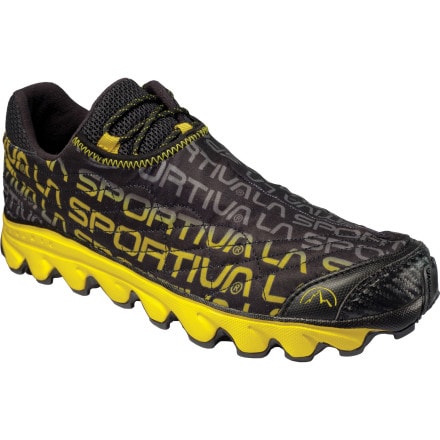
La Sportiva Vertical K Review


Bear with me since this is my first gear review, but I'll give it my best shot.


First off:
I've been looking forward to these shoes since iRunFar posted their first preview of the shoe last year, and I'm happily surprise to see a shoe that live up to its hype.  I took them out for a 13 mile tempo workout on the local trail system, which thanks to the recent rain we've gotten allowed me to really put the shoes through their paces.

Sizing
I was lucky to snag my size for the Vertical K, since (online at least) they've seen a very limited release.  I went with a Size 45, which length-wise is just shy of an 11.5, my usual shoe size (worn for toebox width, not length).  La Sportiva is known for having overly narrow shoes, but I was pleasantly surprised with these.  They are my first pair of La Sportivas so I can't speak to their other shoes, but these felt wide on the forefoot.  The upper seemed to hug my foot, but I could still easily splay my toes.  By looking at top profile of the shoe, you can see it has a flatter toe bumper than most shoes, immediately widening, which seems to have a fairly anatomical fit.

Upper
The upper is two-layers, Airmesh against the foot, with a Super thin nylon wrap over the shoe used as a scree guard.  The tongue system is one I haven't seen before, with only one open slit, on the inside of the tongue, a little further inward than a regular shoe-tongue.  This bothered me the first time I pulled on the shoes, as the tongue flipped under itself.  This was easily remedied, but I don't know why they didn't just use a full foot-wrap for the tongue.

One of my favorite parts of the shoe is the structure of the support system.  The looping points of the laces down the shoe double as the support, which seems to allow the upper to stretch when your foot need it, but still lock the foot in well.  I was able to plant around switchbacks without my foot sliding outward.  I did feel my foot slide forward a little on faster descents, but I believe that could easily be fixed by adjusting the laces before my next run.

Something I should note, that I don't like, but shouldn't be a problem for most people, is the seems on the inside. the heel cup and tong are made of a soft mesh, but the sides have subtle seems running along them.  These are all the same seams you see running along the outside of the shoe.  I only mention it because I like running without socks, and it might pose a problem with that, but I didn't feel any issues with regular swiftwick socks on.

I can't say much for the toe bumper. It looks and feels rugged enough to do its job, but I don't really ever kick rocks so I can't report anything.

Now for the best part of the shoe..
Sole
Photo by iRunFar
The big selling point for the Vertical K, and rightfully so, is its "Morphodynamic" sole, along with the 'FriXion' super sticky rubber outsole.  Walking around on pavement, the cushion actually reminds me of Hoka One Ones (though much less).  The idea behind the morphodynamic sole, and the lack of rock plate, is that the super soft midsole should absorb rocks and roots.  I aims for roots and rocks on sections of my run to see how it went, and while I could feel them, it was not uncomfortable unless I caught a sharp rock in one of the cut-out sections with a thinner midsole.  I felt that, for me, there was enough underfoot for most any run.

I really love the sticky rubber outsole.  It really made a difference coming from the hard rubber outsole of the Saucony Peregrines (my last trail shoe), and gave me the most confidence running downhill I've ever had.  The sticky rubber grabs so well that, rather than slowing nearly to a halt on switchbacks, I was able to come in full speed and simply pivot off without slipping even slightly.  The sticky rubber allowed me to feel very confident jumping down rocks and roots of steep technical downhill.

The lug pattern is simple, but effective enough.  This is likely due to the lugs coupled with the wavy shape of the sole.  The shoe grabbed well even in mud, with just a little lateral sliding on turnover.


All in all, I love this shoe. I'm likely not going to wear it for the bulk of 100 mile training this summer, but it will most definitely be my 50(k)-and-under shoe.


5/26 Edit:  I've put another couple hundred miles on these now,  and I'm very please with them.  They are a bit thin for super rocky runs, to where I can feel the rocks underfoot, but my feet aren't really sore after.  I do most of my runs in these, and use the Salomon Speedcross 3 for really long runs or if my feet feel as if they need a rest.